The God of Ecstasy
The ancient story of Dionysus—the god of wine, theatre, transformation, and divine madness. A deity who breaks boundaries, liberates the soul, and reveals the sacred within the transgressive.
The Twice-Born God
Dionysus's birth is unlike any other god. His mother, the mortal priestess Semele, was impregnated by Zeus himself. But jealous Hera, Zeus's wife, deceived Semele into asking her lover to reveal his true divine form. The sight of his immortal glory consumed her in flames.
Rather than let the unborn child perish, Zeus retrieved the fetus and sewed it into his own thigh, where Dionysus gestated until birth. This extraordinary tale of resurrection and rebirth—the dimetor, or twice-born—is central to his mythology and symbolizes transformation, death, and renewal.
Even in Orphic tradition, Dionysus (known as Zagreus) was born of Zeus and Persephone, dismembered by jealous Titans, and miraculously reconstituted. Death and resurrection became the eternal rhythm of his being.
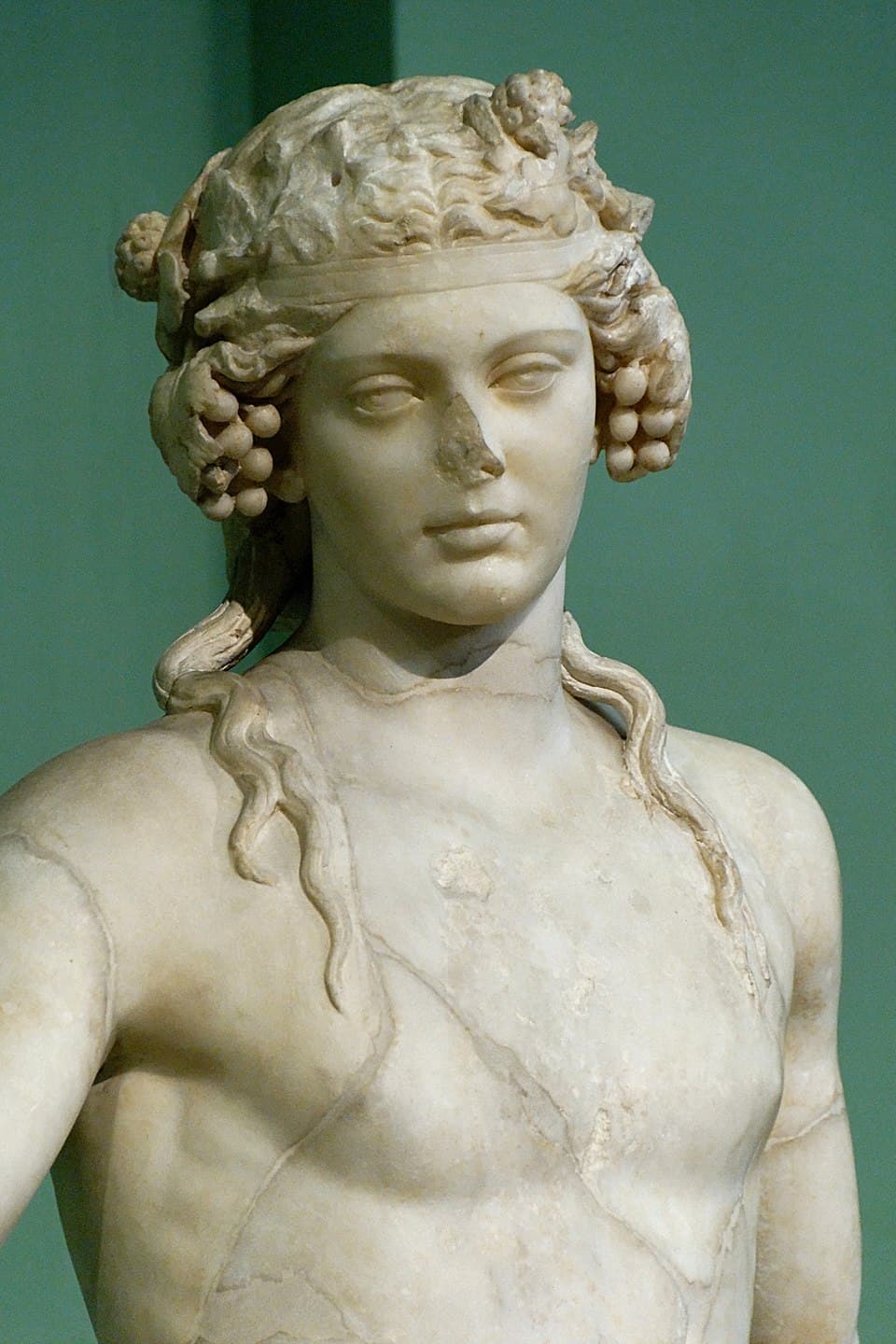
God of Wine, Theatre & Sacred Madness
Dionysus presides over domains that blur the line between civilization and wildness, control and ecstasy. Wine is his most sacred gift—not merely a drink, but a tool for transcendence and divine connection. His "earthly incarnation," wine carries both the power to relieve suffering and to unlock spiritual inspiration.
Theatre & Drama
Dionysus is the patron god of theatre—the art of transformation, performance, and the sacred mask. The festivals of Dionysia featured dramatic competitions that shaped the foundation of Western theatre. Through performance, mortals become gods, and truth is revealed in the guise of fiction.
Ritual Ecstasy
His worship demanded complete surrender to divine intoxication. The Bacchic Mysteries and the Bacchanalia were ecstatic rituals where devotees—especially women known as maenads—achieved states of divine possession, transcending the ordinary limits of human consciousness.
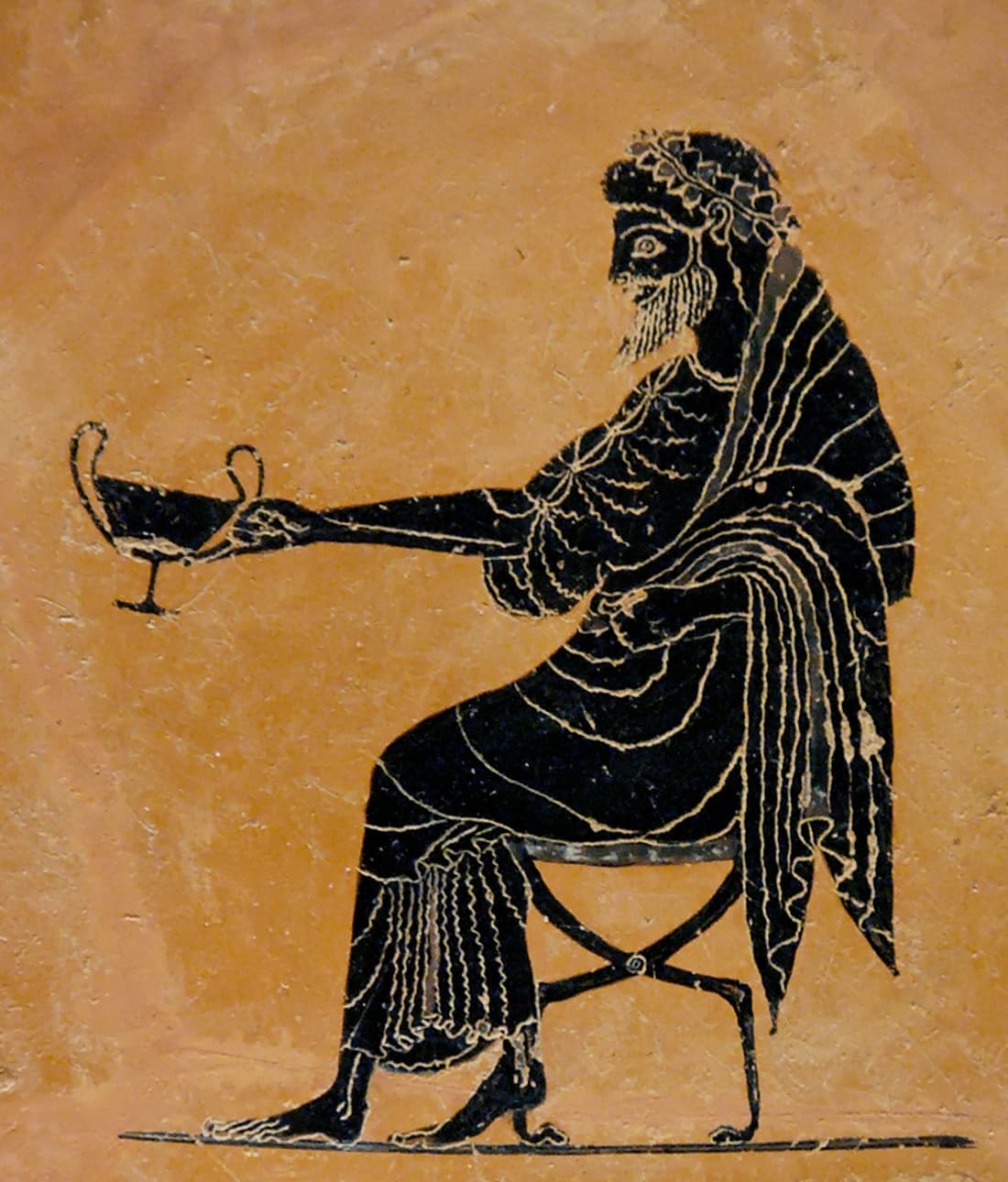
The Maenads: Divine Madness & Female Power
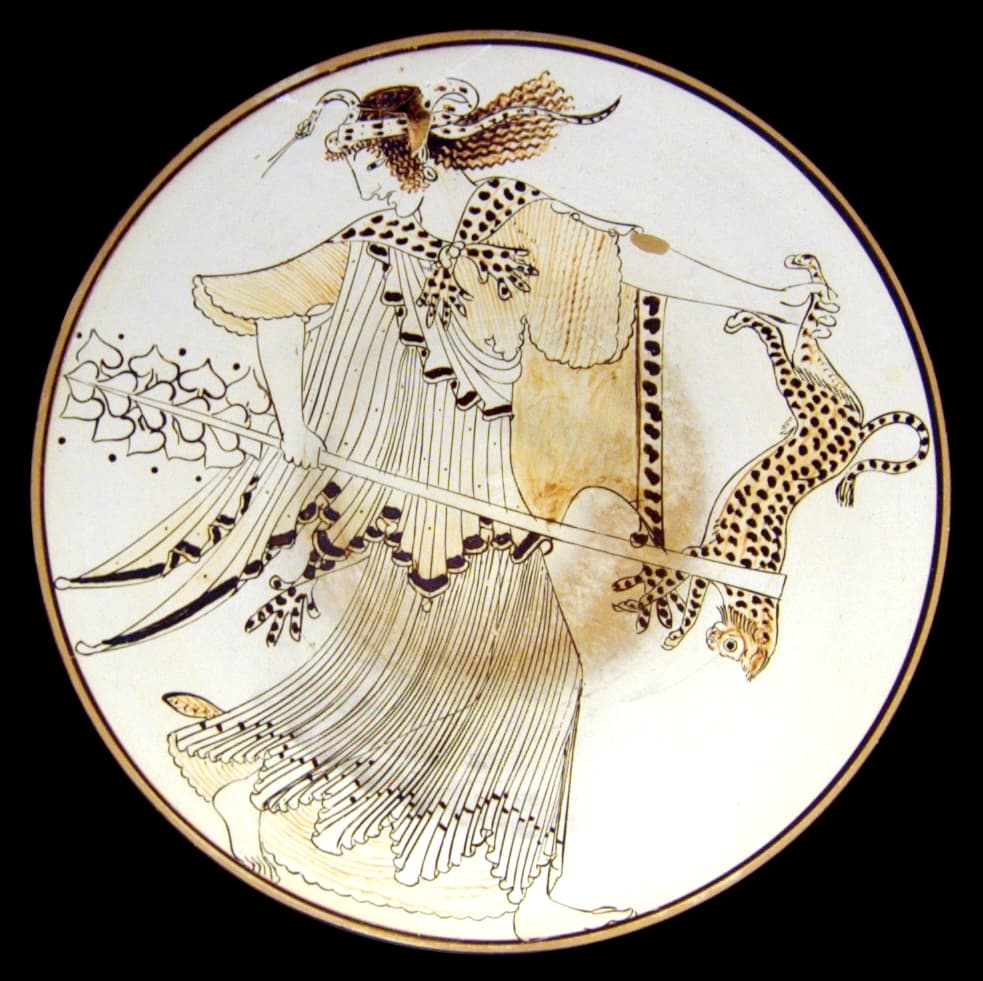
The maenads were Dionysus's most devoted followers—women (and sometimes men) who abandoned civilization to dance, feast, and celebrate in states of sacred frenzy. They wore crowns of ivy, wielded the thyrsus (a fennel-stalk wand), and moved through the wild as embodiments of divine ecstasy.
These weren't women spiraling into chaos—they were liberated. In the rituals of Dionysus, they transcended the rigid social boundaries that confined women to the domestic sphere. They performed blood-offerings for the dead, mediated between the living and deceased, and experienced ecstatic communion with the divine.
The maenad represents the paradox of Dionysian worship: through madness comes clarity; through surrender comes liberation; through breaking rules comes sacred truth.
Sacred Symbols & Attributes
Objects of Power
- ◆The Thyrsus: A fennel stalk crowned with ivy and grapes—symbol of fertility, ecstasy, and divine authority
- ◆The Grapevine: His most sacred plant, representing abundance, intoxication, and transformation
- ◆Theatrical Masks: Objects of transformation and divine revelation
- ◆Ivy: Sacred to him, representing both divine blessing and the wild nature
Animals of Dionysus
- ◆The Bull: Strength, virility, and divine power
- ◆The Panther & Leopard: Grace, danger, and untamed nature
- ◆The Goat: Fertility and wildness
- ◆The Snake: Underworld connection and rebirth
Festivals of Ecstasy
Dionysian worship was marked by festivals that celebrated life, death, fertility, and the sacred union between mortal and divine:
The Dionysia
Urban and rural celebrations featuring dramatic competitions. These were the birthplace of Western theatre, where playwrights competed to present the most profound and moving visions of the human condition.
The Anthesteria
A three-day spring festival honoring the dead and celebrating new wine. It was a liminal time when the boundaries between the living and the deceased grew thin, and Dionysus served as the mediator.
The Bacchic Mysteries
Secret initiation rites that promised salvation, divine connection, and ecstatic communion. These cults were feared by authorities for their transgressive nature—they united people across class, gender, and social boundaries.
The Bacchanalia (Rome)
In Rome, the cult became so popular and transgressive that the state eventually suppressed it, fearing its revolutionary potential. The very act of ecstatic worship threatened the rigid social order.
A God Beyond Borders
Dionysus is unique among the Olympians. He is associated with Osiris of Egypt (both died and were reborn), with Hades (both embody the underworld's eternal cycle), and with fertility gods across cultures. His worship spanned millennia—from ancient Mycenaean times through the classical period, into Rome, and even into the modern era through contemporary Hellenic polytheist communities.
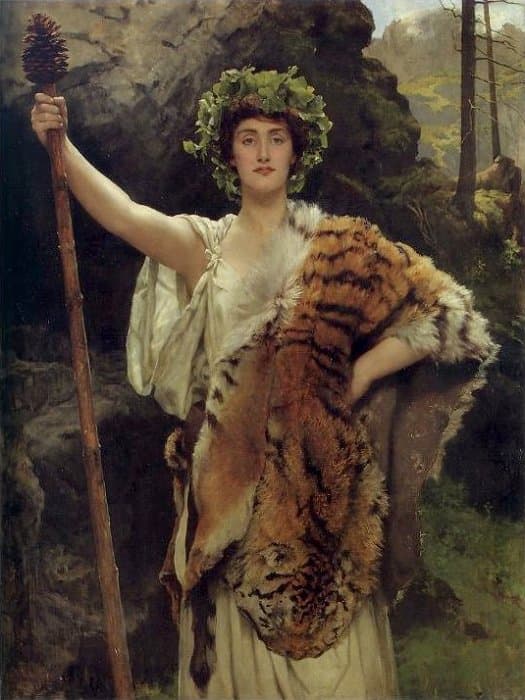
What made Dionysus dangerous to those in power was precisely what made him sacred: his power to dissolve hierarchies, to unite mortals with the divine, to give voice to the voiceless, and to celebrate the body, ecstasy, and transgression as paths to truth.
The Legacy of Dionysus
"In wine there is truth. In ecstasy, liberation. In madness, wisdom."
Dionysus reminds us that civilization's boundaries are permeable, that ecstasy and spirituality are intertwined, that women's power is sacred, and that transformation—death and rebirth—is the eternal rhythm of existence. He is the god of paradox: of joy and suffering, of order and chaos, of the divine made manifest in the mortal body.